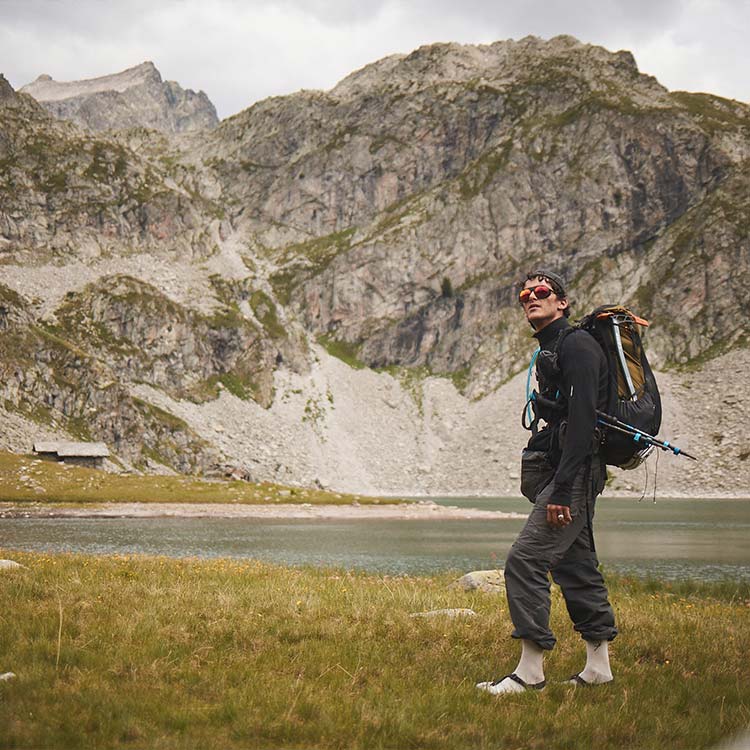
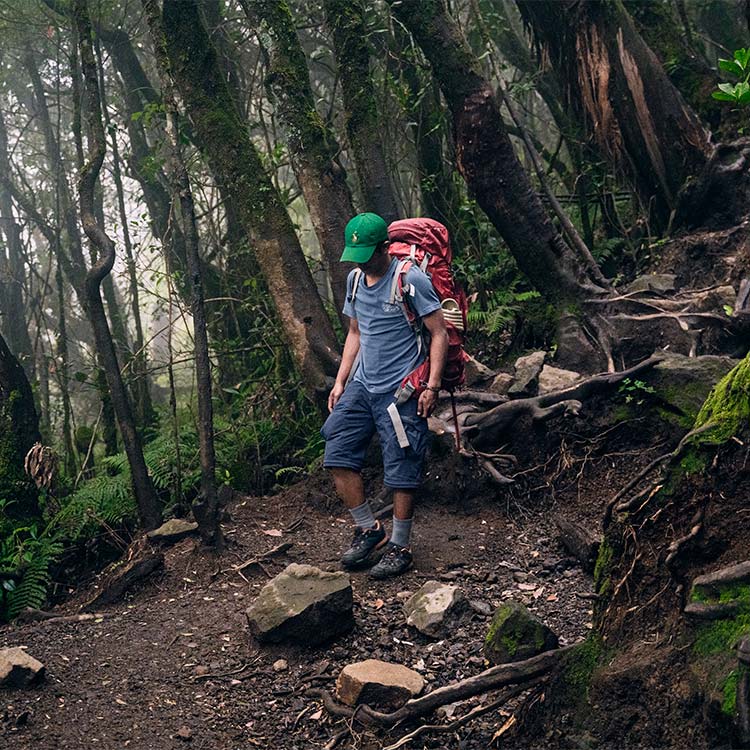
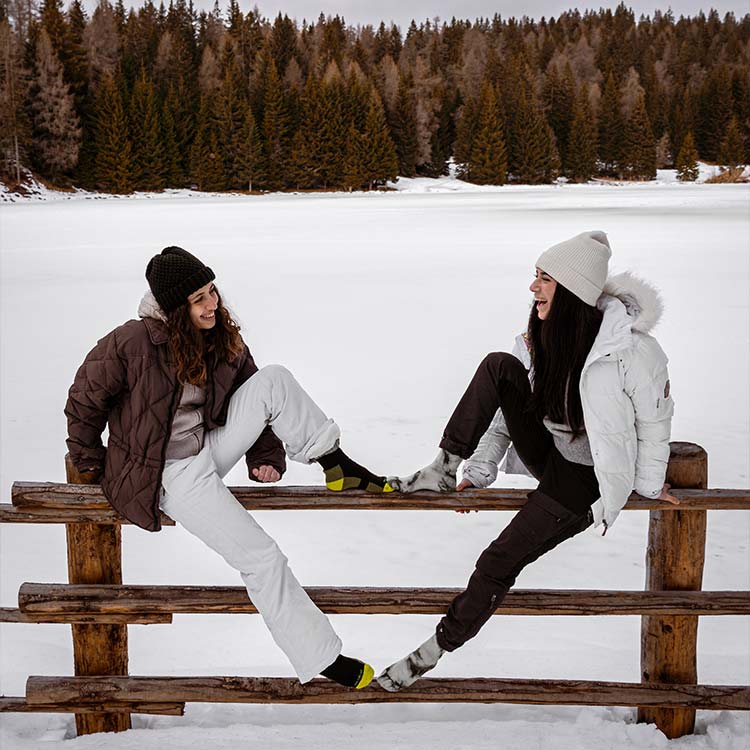


A hiking sock sits between your foot and a boot that wasn't built for comfort. It's the one part of that equation you can change in ten seconds at a trailside break — and it decides whether the last five miles feel fine or feel miserable.
Five things decide whether a sock works for you: height, cushioning, fabric, fit, and how many pairs you carry. Take them in that order and the choice gets simple.

Match the Height to Your Shoes
Height is the first decision, because your shoes have already made most of it for you. The rule is short: the sock should sit higher than the shoe's collar.
The collar of a boot is the hardest edge your foot meets all day. If the sock ends below it, that edge rubs skin — or a single thin layer of fabric — with every step. That's how a hot spot starts. Let the sock clear the collar, and the boot rubs wool instead.
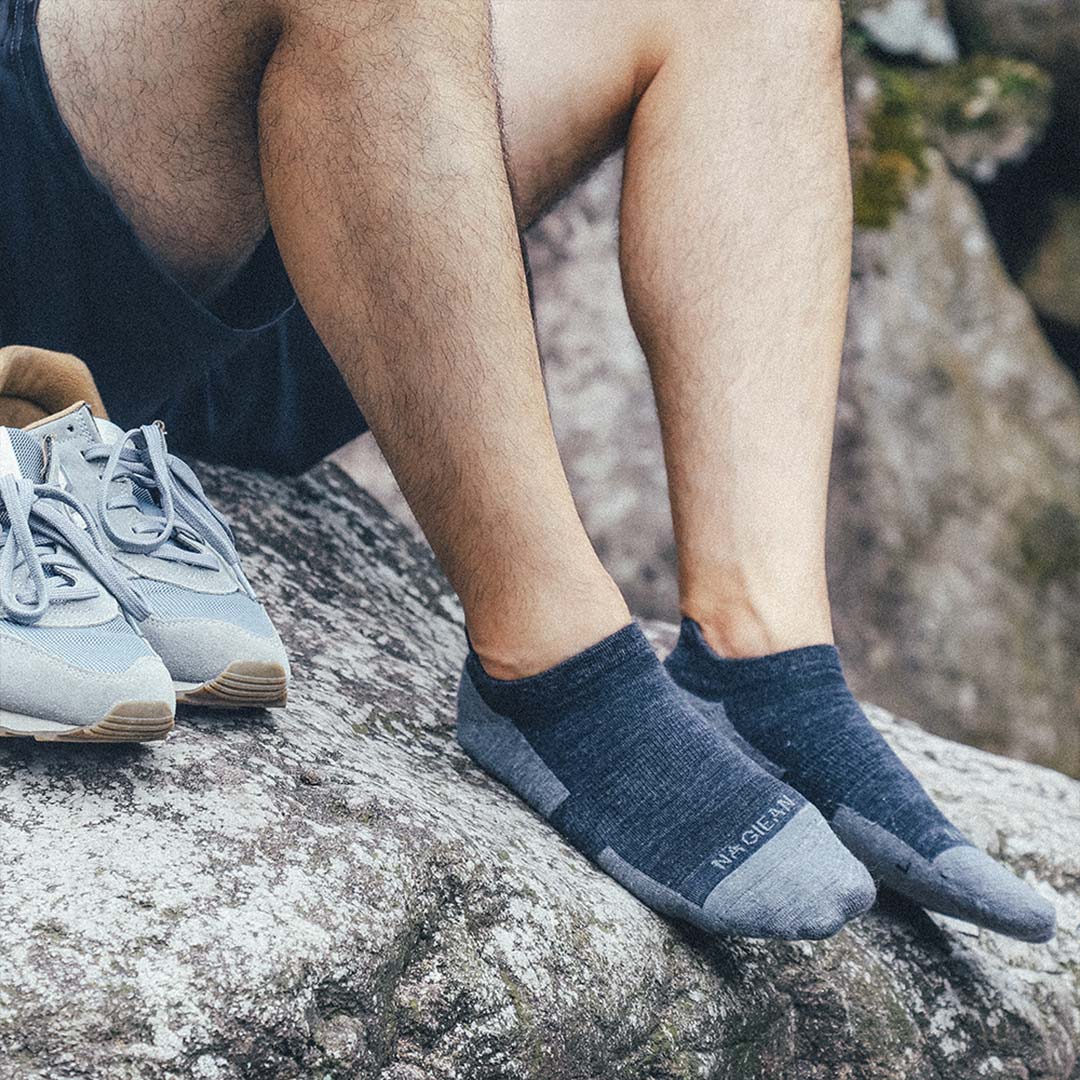
Trail runners and low-cut shoes
A no-show sock that stays below the ankle is enough. The collar sits low, so there's nothing to rub against.
Example: Na Giean's Twilight Lightweight No-show Running Socks.
Mid-cut shoes and boots
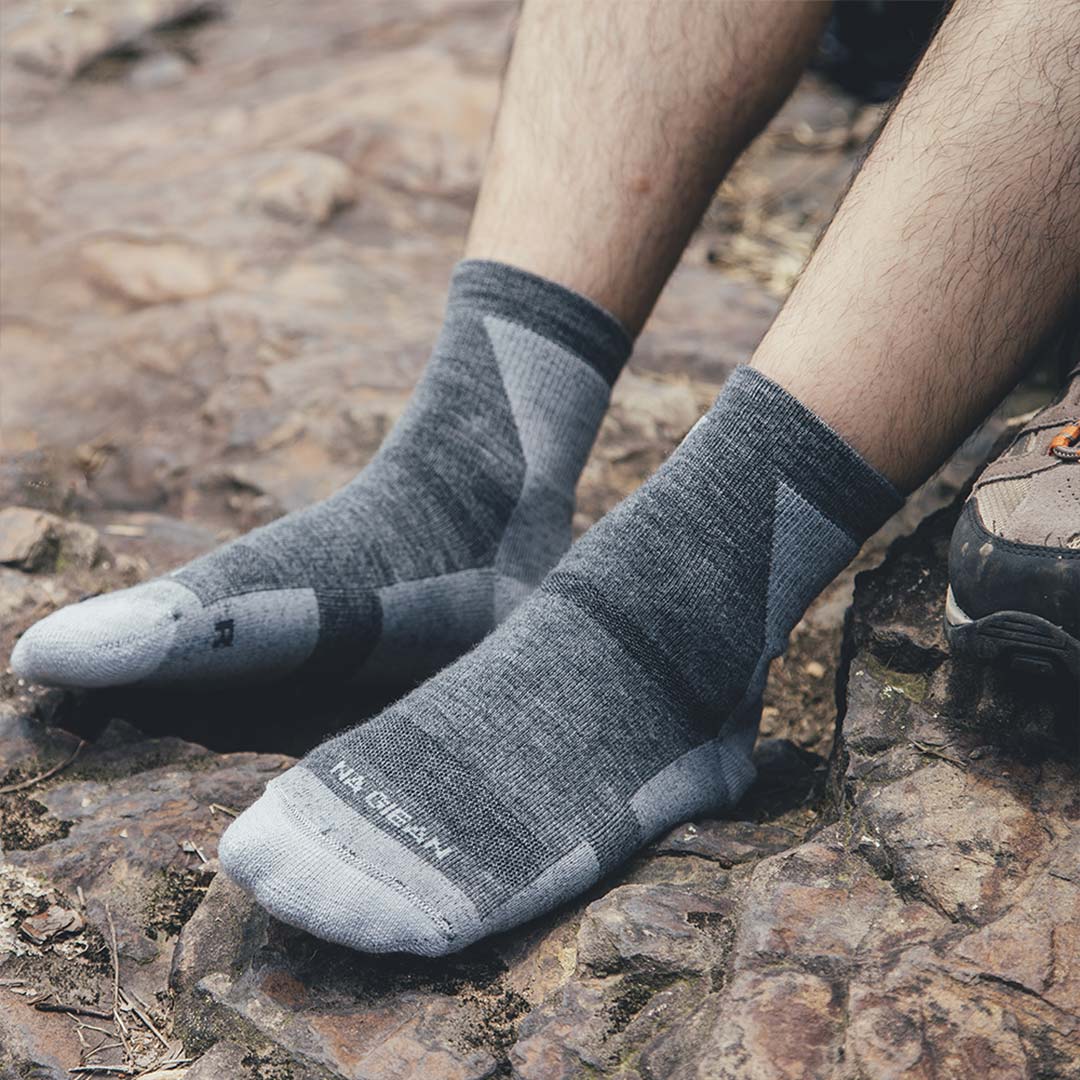
A micro sock — also called an ankle or quarter sock — covers the ankle bone and still clears the collar.
Example: Na Giean's Enhanced Medium Weight Micro Hiking Socks.
High-cuff boots
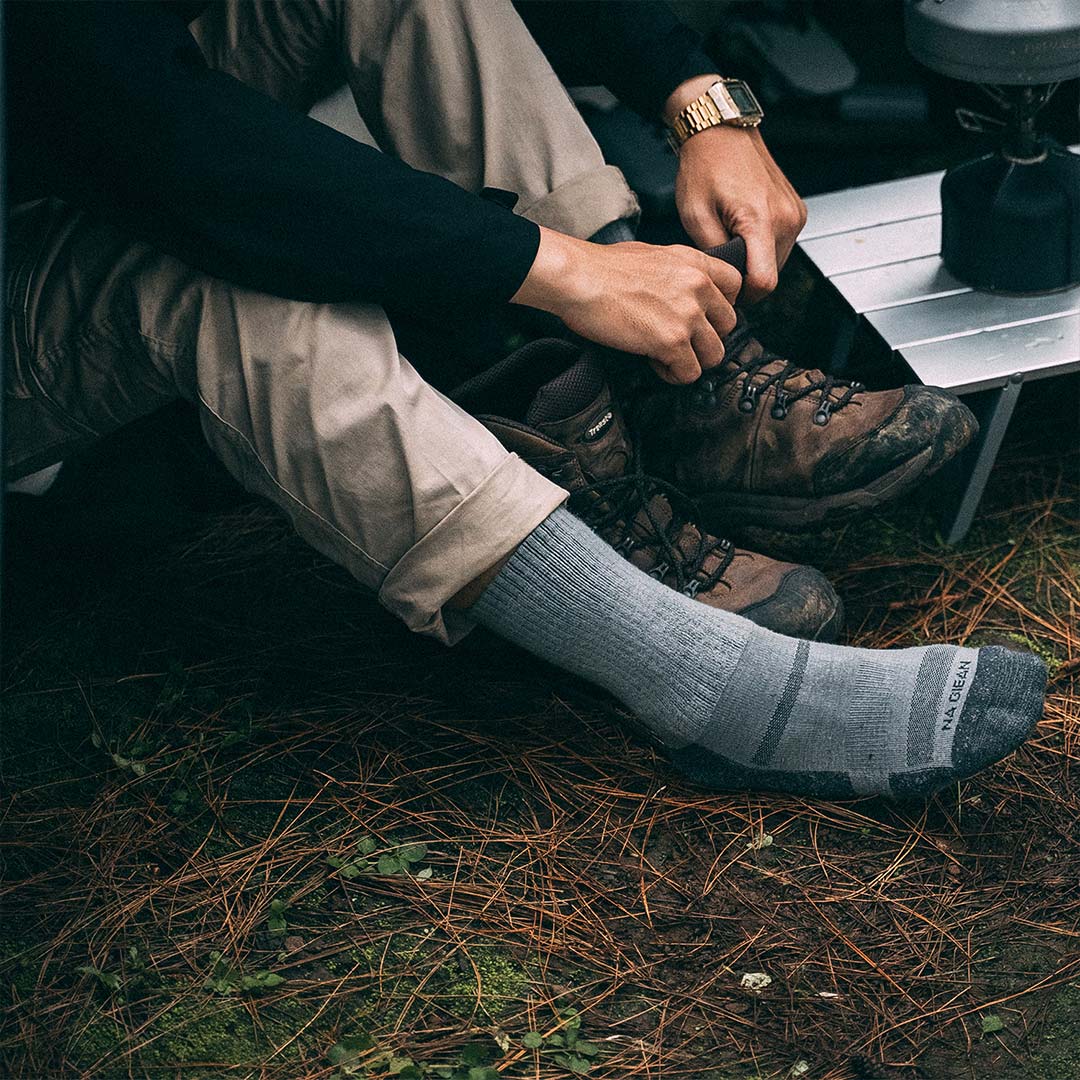
A crew sock reaches mid-calf, keeping fabric between your leg and the top of the boot.
Example: Na Giean's Sober Gray Enhanced Medium Weight Crew Hiking Socks.
Micro and crew are the two heights most hikers end up with. Either works with low-cut shoes — just remember that taller coverage runs warmer, which you'll notice on a hot day.
Match the Cushioning to the Ground and the Season
Cushioning is the padding underfoot, and in some designs, up the leg. More isn't automatically better. Cushion has to fit inside your shoe, and a sock that's too thick presses your foot against the boot — creating the very friction it was meant to prevent.
Hiking socks generally come in four levels.
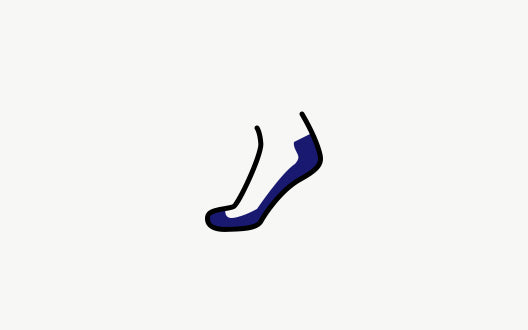
Light cushion
Thin, with padding only in key spots — heel and toe. Best in warm weather, or in shoes that don't leave room for more.
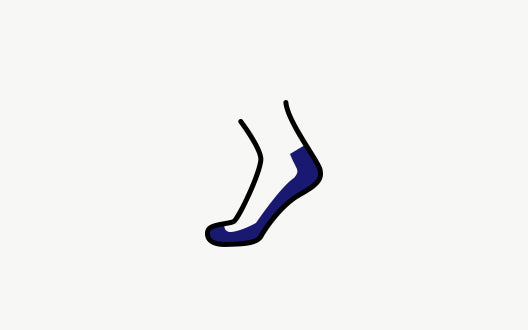
Medium cushion
Cushion across the whole sole. Warm enough for moderate to cold conditions, and the middle ground most hikers settle on.
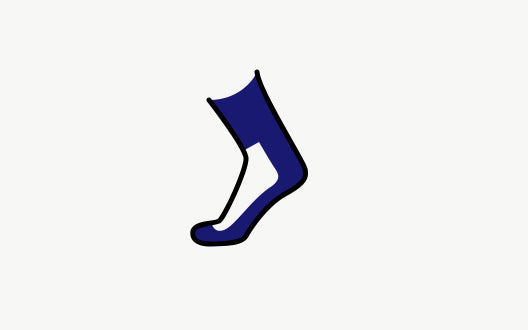
Enhanced medium cushion
Cushion underfoot and up through the leg. Thick, but merino keeps it breathable. Our most flexible option — if you'd rather not think about it, start here.
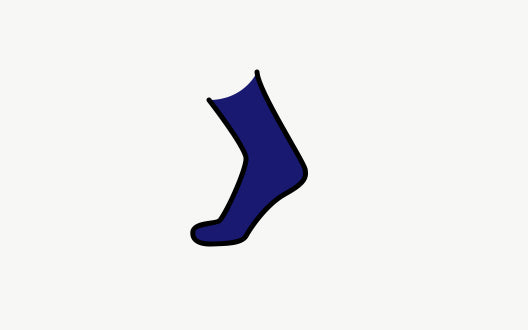
Heavy cushion
The thickest and warmest, cushioned throughout. Built for long days, rough ground, and cold weather — and for boots with room to spare.

Choose a Fabric That Works When It's Wet
Hiking socks aren't usually one fiber. They're a blend, and each fiber does a different job. Merino wool moves moisture away from your skin and keeps much of its warmth even when damp. Nylon takes the abrasion where the sock meets the shoe. A small amount of spandex holds the shape, so the sock doesn't slide down inside your boot.
Cotton has no place in a hiking sock. It soaks up sweat and holds it against your foot, which is how a long day turns into a cold, blistered one.
Wool isn't magic, and it isn't always the right answer. It wins on warmth when wet, on odor, and on comfort against skin. Synthetics dry faster and resist abrasion better. Which one suits you depends on the conditions you hike in — our honest comparison of merino and synthetic goes through both sides.

Get the Fit Right
A sock that's too big bunches and wrinkles. A sock that's too small squeezes and slides. Both end in friction — just in different places.
Measure rather than guess, and go by your foot at the end of the day, not first thing in the morning. Feet swell as you walk. You're after a snug fit that isn't tight: the sock should follow your foot without leaving marks.
Three checks before a new pair goes on a real hike. Nothing wrinkles when you pull the sock on. Your heel sits in the heel pocket, not halfway up your ankle. Your toes have room to move without being pressed together.

How Many Pairs Do You Need
For day hikes, two pairs is the honest answer — one on your feet, one in the pack. Wet socks are the most common reason a good hike turns bad, and a dry pair weighs almost nothing.
For multi-day trips, three is comfortable. One worn, one drying on the back of your pack, one clean. Merino helps here: it resists odor, so a pair can go more than one day between washes.
If you're starting from nothing, buy two or three pairs of the same sock. Nothing to match on laundry day, and when one wears through, you already know what to order.
Frequently Asked Questions
Are merino wool socks worth the price?
Merino socks cost more than cotton or basic synthetics, and the difference is real. You're paying for warmth when wet, odor resistance, and comfort against skin — the three things that decide whether a wet day ruins a hike.
If you hike a handful of times a year in dry weather, a synthetic pair does the job for less. If you're out most weekends, in shoulder-season weather, or sleeping on the trail, merino earns the difference.
Do you need different socks for summer and winter?
Not different socks — different cushioning. Warm weather pairs well with light or medium cushion in a thinner sock. Cold weather wants more padding underfoot and up the leg, which is what heavy and enhanced medium cushion are for.
Height matters more than season. Match it to your footwear first, then pick the cushioning for the temperature.
Should hiking socks be tight or loose?
Snug, not tight. A sock that's too loose bunches, wrinkles, and slides inside the boot. One that's too tight squeezes the foot and digs in at the arch.
The test is simple: pull the sock on and check for marks. Fit should follow your foot without leaving lines on your skin.
Do you need liner socks underneath?
For most hikers, no. Liners were designed to add a friction layer under a thick wool sock, but a well-fitted merino sock does the same job on its own.
There's one case where a liner helps: long, hot descents when you're blister-prone. If you've had blisters in the same spot more than once, a thin liner is worth trying before you blame the boots.
How long should merino hiking socks last?
With reasonable care, a pair should cover a few hundred miles of trail. Wash them inside out in cool water and keep them out of the dryer — heat is what breaks merino down fastest.
When the heel or the ball of the foot thins enough to see light through it, it's time to replace them. Until then, a small hole can be darned. Here's how to make merino socks last.
Still deciding? Shop hiking socks → Shop running socks →
If the size isn't right, we'll replace them. Hike Further Guarantee →